Financial crime remains a significant challenge for banks, financial institutions and other businesses operating within the financial services sector. As money laundering techniques become increasingly sophisticated, organisations need knowledgeable professionals who can recognise suspicious transactions, understand regulatory obligations and respond effectively to potential risks.
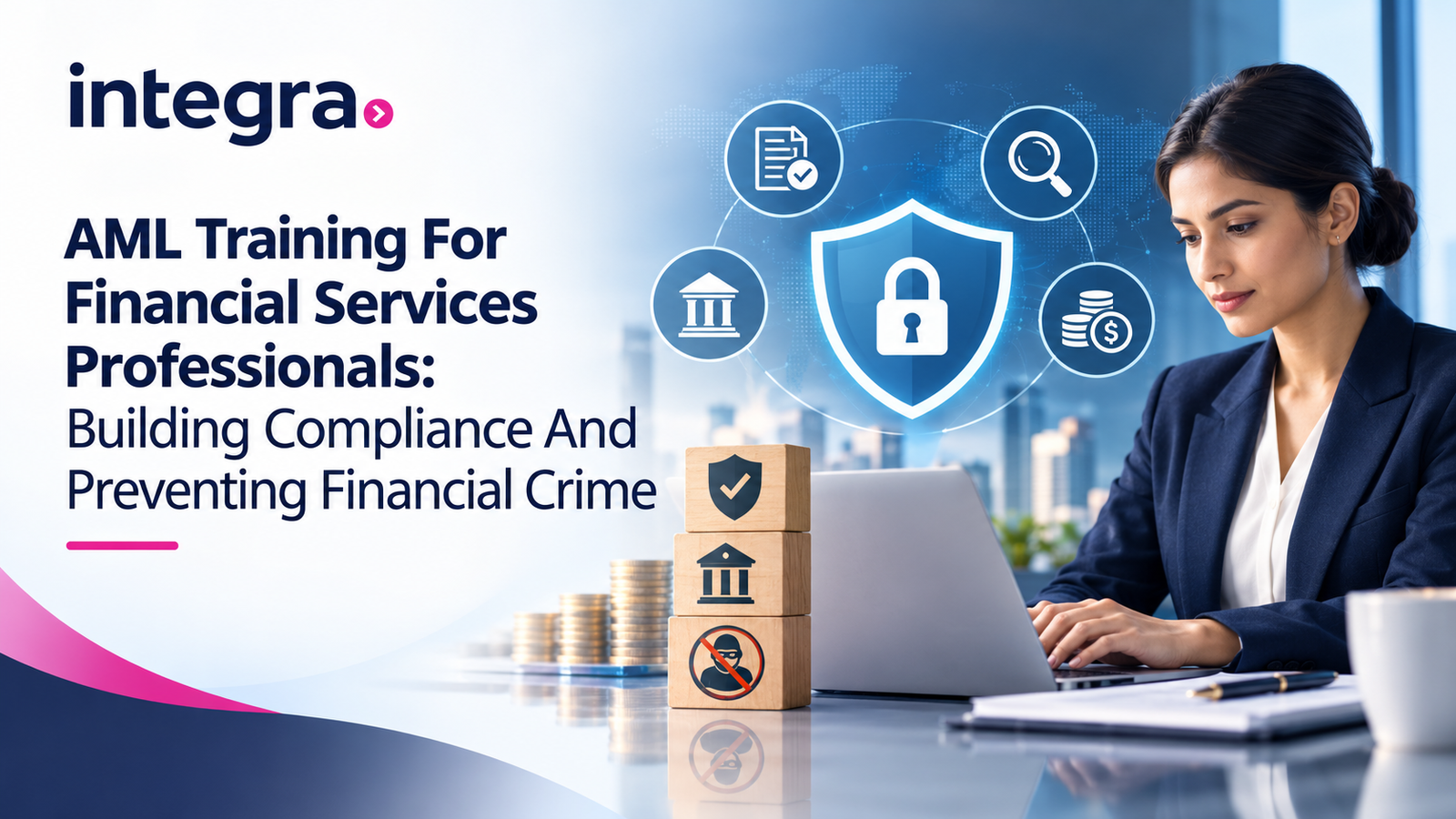
AML training for financial services professionals plays a vital role in developing these capabilities. Anti-Money Laundering (AML) training equips employees with the knowledge and practical skills required to identify money laundering risks, support regulatory compliance and protect their organisations from financial and reputational damage. For financial services organisations, investing in structured AML training is not simply a compliance exercise. It is an essential step towards creating a strong compliance culture, improving risk management and maintaining trust among customers, regulators and business partners.
What Is AML Training?
Anti-Money Laundering training educates professionals about the methods criminals use to disguise the origins of illegally obtained money and the measures organisations can take to detect and prevent such activities. The training covers relevant legislation, regulatory expectations, customer due diligence procedures, suspicious transaction monitoring and internal reporting processes. It also helps employees understand their responsibilities when dealing with customers, reviewing transactions and escalating potential concerns.
AML training is particularly important for professionals working in banking, insurance, investment management, fintech, payment services and other regulated financial activities. Depending on their roles, employees may require general AML awareness or more specialised instruction covering investigations, risk assessments and compliance management. Effective training helps ensure that employees understand not only the rules but also how to apply them in their daily responsibilities.
Why Is AML Training Important For Financial Services Professionals?
1. Supporting Regulatory Compliance
Financial institutions must comply with applicable anti-money laundering laws, regulations and supervisory requirements in the jurisdictions where they operate. Failure to meet these obligations can result in enforcement action, financial penalties and reputational harm. AML training helps employees understand relevant regulatory requirements and follow their organisation’s internal policies and procedures. It also supports a consistent approach to compliance across departments. Regular training is especially valuable when regulatory expectations, internal controls or emerging financial crime risks change.
2. Identifying Suspicious Transactions
Money laundering can involve complex transactions, unusual payment patterns, shell companies, concealed ownership structures and other techniques designed to disguise the origin of funds. Through AML training, professionals learn to recognise warning signs, assess unusual customer behaviour and identify transactions that may require further investigation.
Employees also learn that a single warning sign does not automatically prove criminal activity. Concerns should be assessed objectively, documented appropriately and escalated through established reporting channels.
3. Protecting Business Reputation
A failure to identify or report suspicious activity can expose an organisation to legal consequences, financial losses and negative publicity. Well-trained employees contribute to stronger internal controls and help reduce the likelihood that financial services are exploited for illicit purposes. A robust AML programme also demonstrates that an organisation takes its responsibilities seriously, supporting confidence among customers, regulators, investors and other stakeholders.
4. Strengthening Risk Management
AML training encourages professionals to take a risk-based approach to customer relationships and financial transactions. This includes understanding customer profiles, assessing geographical and sector-specific risks, and recognising circumstances that require enhanced due diligence. By improving employees’ understanding of risk, organisations can make better-informed decisions and allocate compliance resources more effectively.
Key Topics Covered In AML Training
A comprehensive AML training programme should reflect the responsibilities of its intended audience and the risks associated with the organisation’s activities.
Common topics include:
Understanding money laundering: Learn about the placement, layering and integration stages often used to explain how illicit funds enter the financial system, move through transactions and appear legitimate.
Customer due diligence (CDD): Understand the importance of verifying customer identities, establishing the purpose of business relationships and obtaining relevant information about customers.
Enhanced due diligence (EDD): Explore situations in which additional checks may be appropriate, including higher-risk relationships, subject to applicable requirements and organisational policies.
Know Your Customer (KYC): Learn how customer identification, verification and ongoing reviews support the prevention of financial crime.
Politically exposed persons (PEPs): Understand the additional risk considerations and controls that may apply to politically exposed persons and their relevant associates or family members under applicable rules.
Transaction monitoring: Recognise unusual patterns, inconsistent customer activity and other indicators that may warrant further review.
Suspicious activity reporting: Understand internal escalation procedures, reporting responsibilities, record-keeping requirements and the importance of confidentiality.
Sanctions and emerging threats: Develop awareness of relevant sanctions obligations, fraud-related risks, digital payment channels and other developments that may affect financial crime controls.
Together, these topics help employees connect regulatory principles with practical workplace decisions.
Who Should Undertake AML Training?
AML training is relevant to a wide range of professionals across financial services. The depth of training should be appropriate to each individual’s responsibilities and exposure to financial crime risk. Key audiences include:
- Banking professionals involved in customer onboarding, lending and payment processing.
- Compliance officers and AML specialists responsible for monitoring controls and managing regulatory obligations.
- Risk managers who assess financial crime exposure and oversee risk mitigation.
- Investment and wealth management professionals working with clients, investments and complex ownership structures.
- Fintech and payment services employees handling digital transactions and customer accounts.
- Customer service and operations teams who may encounter suspicious activity during routine interactions.
- Senior managers and directors responsible for governance, oversight and the effectiveness of compliance programmes.
Training should not be restricted to the compliance department. Employees across the organisation may encounter warning signs, making organisation-wide awareness an important part of an effective AML framework.
Benefits Of Regular AML Training
One-off training may provide a useful introduction, but financial crime risks and regulatory expectations continue to evolve. Regular refresher sessions help employees retain knowledge and respond appropriately to new threats. The key benefits include improved awareness of suspicious activity, greater consistency in applying internal procedures, stronger documentation and escalation practices, and increased confidence when handling potential compliance concerns.
Organisations can further improve learning outcomes through practical case studies, scenario-based exercises, knowledge assessments and role-specific training. These methods help employees understand how AML principles apply to real workplace situations. Training effectiveness should also be reviewed periodically. Assessment results, compliance monitoring findings, internal audit observations and emerging risk patterns can help identify knowledge gaps and guide future training.
How To Choose The Right AML Training Provider
Selecting a suitable training provider is an important consideration for organisations seeking to strengthen their compliance capabilities. Look for training that reflects relevant regulatory frameworks, provides clear explanations of AML concepts and includes practical examples relevant to financial services. The programme should be appropriate for participants’ experience levels and job responsibilities. It is also worth considering the flexibility of delivery, the availability of refresher training, assessment methods and opportunities to update learning materials as requirements change. A reliable training partner should help organisations move beyond theoretical knowledge towards practical awareness and consistent compliance behaviour. Integra can be considered as a training partner for organisations looking to develop professional capabilities. Before selecting a specific programme, businesses should confirm the course content, delivery format and suitability for their regulatory and operational requirements directly with Integra.
AML training for financial services professionals is a fundamental component of an effective financial crime prevention strategy. It helps employees understand their responsibilities, recognise suspicious activity, follow appropriate reporting procedures and contribute to stronger regulatory compliance. By investing in relevant, practical and regularly updated training, financial services organisations can improve employee awareness, strengthen internal controls and reduce exposure to money laundering risks. For organisations seeking to build a more informed and compliance-focused workforce, the right training approach can make a meaningful difference.