Money laundering and financial crime risks can affect businesses across many industries, particularly organisations that work with clients, beneficial owners, complex corporate structures or cross-border transactions. As regulatory expectations continue to evolve, businesses need more than a written policy — they need practical processes that support effective customer due diligence, risk assessment, monitoring and ongoing compliance.
AML compliance services for businesses provide specialist support to help organisations establish, maintain and improve their anti-money laundering and counter-terrorist financing (AML/CFT) frameworks. From KYC and customer onboarding to sanctions screening, risk assessments and independent reviews, the right compliance support can help businesses manage their regulatory responsibilities more effectively. Integra provides corporate, compliance and risk solutions designed to help organisations navigate regulatory requirements with practical, technology-enabled support.
What Are AML Compliance Services For Businesses?
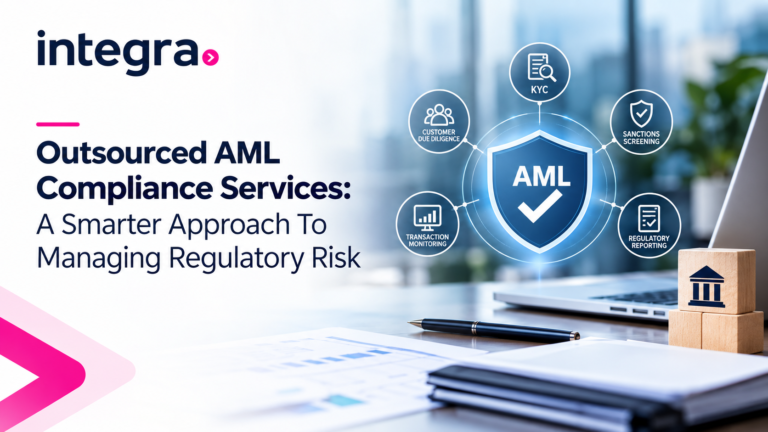
AML compliance services are professional solutions designed to help businesses meet applicable anti-money laundering and counter-terrorist financing obligations. Depending on the organisation’s activities, size, risk profile and regulatory environment, these services can include:
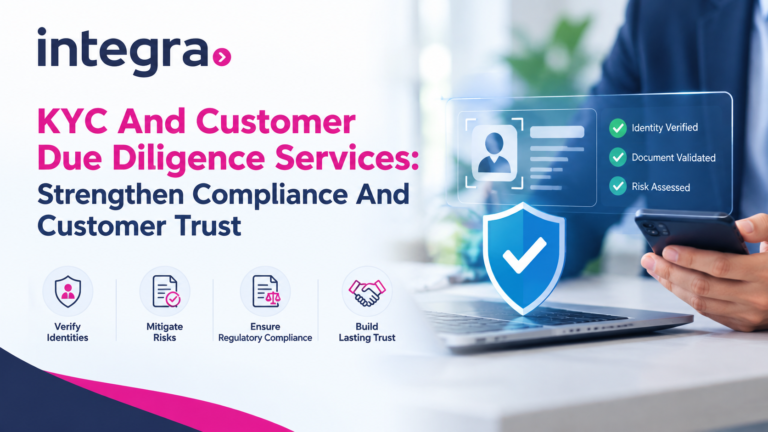
- Customer due diligence (CDD) and KYC support
- Customer onboarding processes
- Business and customer risk assessments
- PEP and sanctions screening
- Enhanced due diligence (EDD)
- AML/CFT policies and procedures
- Compliance monitoring
- Independent AML reviews
- Compliance Officer support
- AML advisory and helpdesk services
- AML/KYC training
An effective AML programme should be proportionate to the risks faced by the organisation. Rather than treating compliance as a one-off exercise, businesses should establish processes that can be maintained and reviewed as their operations and regulatory obligations develop.
Why Is AML Compliance Important For Businesses?
AML compliance is an important part of responsible business management, particularly for organisations that are exposed to money laundering, terrorist financing or other financial crime risks. Weak compliance processes can make it more difficult to identify unusual or potentially high-risk activity. Inadequate customer information, inconsistent onboarding procedures and incomplete documentation can also create challenges when organisations need to demonstrate how compliance decisions were made.
A structured AML framework helps businesses establish clear processes for identifying customers, understanding ownership structures, assessing risk and documenting due diligence. For organisations operating across borders, the challenge can be greater because they may need to manage different regulatory expectations and customer risk factors. Integra supports local and international clients, including organisations with cross-border structures and regulatory obligations in multiple jurisdictions.
Key Elements Of An Effective AML Compliance Framework
1. Customer Due Diligence and KYC
Knowing who your customers are is a fundamental part of an effective AML programme. Customer due diligence involves collecting and assessing relevant information so a business can understand the identity, ownership and risk profile of its customers. Depending on the circumstances, businesses may need to verify identity documents, beneficial ownership information, addresses and other relevant information. Integra supports customer onboarding, KYC and due diligence processes as part of its compliance offering.
2. Business Risk Assessments
Every organisation has a different risk profile. Factors such as customer types, geographical exposure, products, services and delivery channels can influence the level of AML risk. An AML business risk assessment helps an organisation identify relevant risks and determine whether existing controls are appropriate. A risk-based approach also allows businesses to allocate compliance resources where they are most needed rather than applying identical procedures to every customer.
3. PEP And Sanctions Screening
Screening customers and beneficial owners against relevant PEP, sanctions and adverse media databases can form an important part of ongoing due diligence. However, screening is not simply about identifying a potential match. Potential results may require further assessment to determine whether the information relates to the actual customer and what additional action may be appropriate. Integra provides PEP and sanctions screening support, together with services such as address, document, face and corporate verification and enhanced due diligence.
4. AML Policies And Procedures
Policies and procedures provide the operational framework for implementing an AML programme. They should reflect the organisation’s activities, regulatory obligations and risk profile rather than relying solely on generic templates. Businesses may also need to review their documentation periodically to ensure that it remains aligned with changes in regulations, operations and internal processes. Integra assists organisations with AML/CFT policy documentation and can review and update AML manuals, risk assessments, client files, onboarding documentation and KYC records where required.
5. Ongoing Monitoring And Reviews
AML compliance does not end once a customer has been onboarded. Customer information and risk profiles may change over time, making ongoing monitoring and periodic reviews important components of an effective compliance framework. Independent AML reviews can also help organisations identify gaps in existing controls and receive practical recommendations for improvement. Integra’s compliance services include independent AML reviews, ongoing advisory support and compliance monitoring.
How Technology Can Support AML Compliance
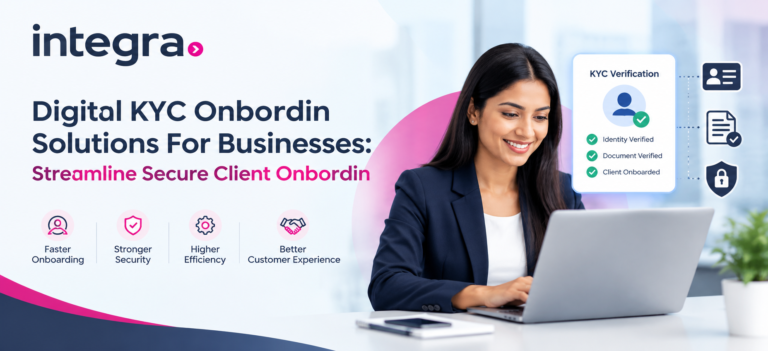
Technology can help businesses organise compliance activities and improve consistency across their onboarding and due diligence processes. Integra’s Onbordin platform is designed to support digital client onboarding, secure document collection, initial risk assessments and centralised record management. It provides a structured workflow for managing compliance information and maintaining audit-ready records. Technology does not replace professional judgement. Instead, it can help compliance teams organise information more efficiently while allowing specialists to focus on risk assessment, review and decision-making.
Why Businesses Choose Outsourced AML Compliance Support
Maintaining an in-house AML function can require significant specialist knowledge, resources and ongoing attention. For smaller organisations or businesses experiencing growth, outsourced AML compliance services can provide access to additional expertise without requiring a fully established internal compliance team.
Integra offers outsourced compliance support for organisations that do not maintain in-house expertise or require additional capacity. Its services can include Compliance Officer support, AML screening coordination, enhanced due diligence and compliance reviews. This approach can be particularly useful when a business needs assistance with a specific compliance project, requires additional capacity or wants ongoing access to professional AML guidance.
Choosing The Right AML Compliance Partner
When evaluating AML compliance services for businesses, organisations should consider whether the provider can offer support that matches their regulatory obligations and operational requirements. Important considerations include:
- Experience with AML/CFT compliance
- Understanding of the organisation’s industry and risk profile
- Practical rather than purely theoretical guidance
- KYC and customer due diligence capabilities
- Risk assessment support
- Screening and enhanced due diligence
- Policy and procedure reviews
- Independent compliance assessments
- Ongoing advisory support
- Appropriate technology solutions
- Training and compliance awareness
The objective should be to establish a sustainable compliance framework that works in practice and can adapt as the business develops.
Strengthen Your AML Compliance with Integra
Effective AML compliance requires ongoing attention, appropriate controls and a clear understanding of risk. Businesses do not have to manage every compliance challenge alone. Integra combines AML/CFT expertise, compliance advisory services and technology-enabled solutions to help organisations strengthen their onboarding, due diligence, documentation and compliance oversight. Its services range from AML Compliance as a Service and business risk assessments to independent AML reviews, screening solutions and ongoing AML advisory support.
With more than 15 years of experience and support for corporate, compliance and risk requirements, Integra works with organisations seeking practical solutions tailored to their needs. If your organisation needs to establish a new AML framework, strengthen existing controls or obtain ongoing compliance support, professional AML compliance services for businesses can provide a structured way to manage regulatory responsibilities while supporting efficient business operations.