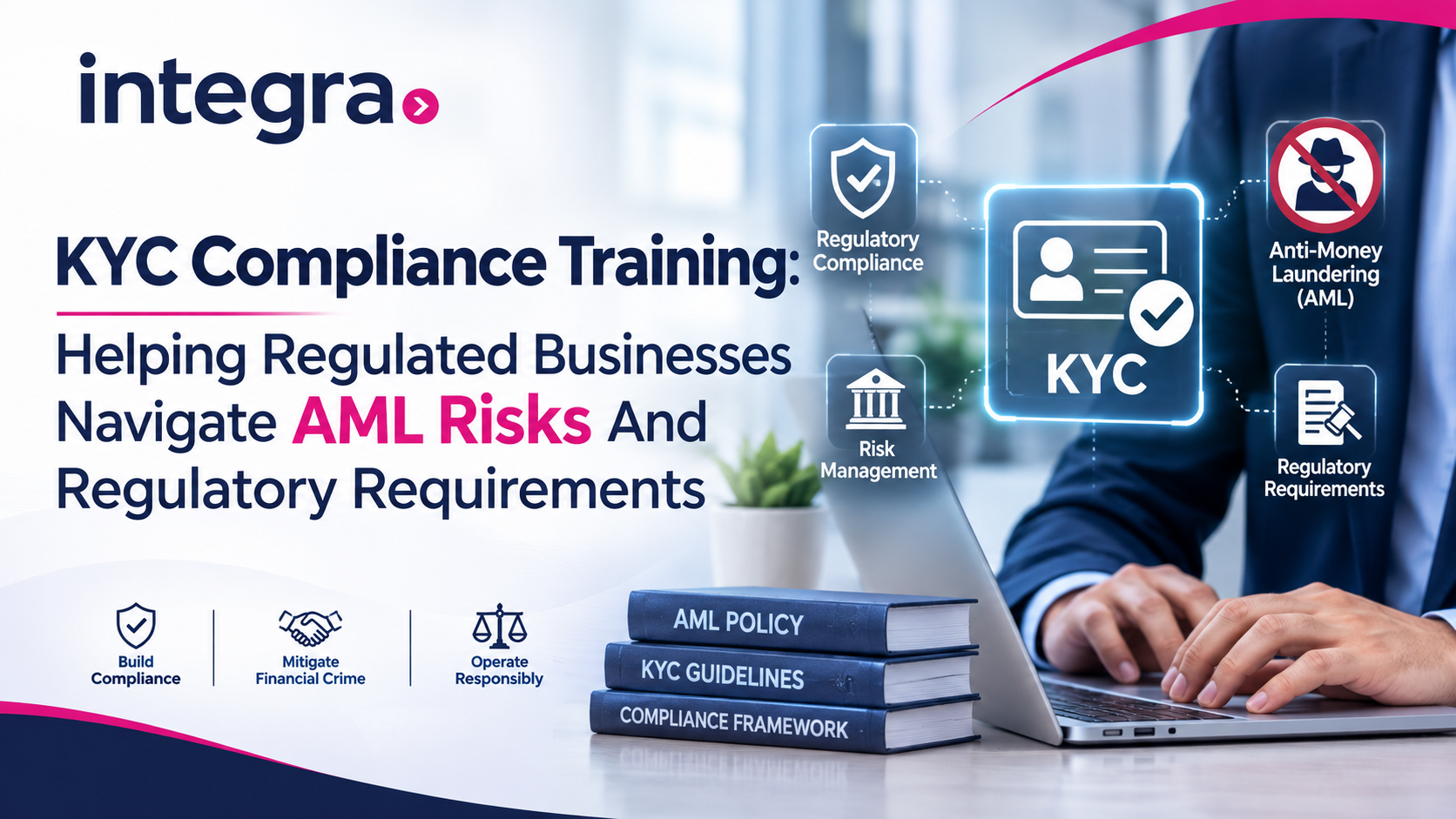
In today’s increasingly regulated business environment, maintaining effective Know Your Customer (KYC) procedures is essential for organisations operating in financial and other regulated sectors. Businesses must understand who their customers are, verify their identities, assess potential risks and maintain appropriate records to meet regulatory expectations. However, having compliance policies in place is not enough. Employees must also understand how to apply them consistently in their everyday responsibilities. This is where KYC compliance training for regulated businesses becomes particularly important. Effective training equips employees with the knowledge and practical skills needed to identify suspicious activities, conduct customer due diligence and support wider Anti-Money Laundering (AML) and Countering the Financing of Terrorism (CFT) obligations. At Integra, we help organisations strengthen their compliance frameworks through practical training, regulatory guidance, risk assessments and technology-enabled solutions.
Why Is KYC Compliance Training Important For Regulated Businesses?
KYC is a fundamental part of an organisation’s AML/CFT framework. It involves identifying customers, verifying their identities, understanding the nature of their business relationships and assessing the risks associated with their activities. Without appropriate training, employees may overlook important warning signs, collect insufficient documentation or fail to recognise unusual customer behaviour. These gaps can expose organisations to financial crime, regulatory scrutiny, reputational damage and potential penalties. KYC compliance training helps businesses:
- Understand their regulatory and compliance responsibilities.
- Apply consistent customer identification and verification procedures.
- Recognise suspicious transactions and unusual customer behaviour.
- Identify politically exposed persons (PEPs) and potential sanctions risks.
- Conduct appropriate customer due diligence (CDD) and enhanced due diligence (EDD).
- Maintain accurate documentation and audit trails.
- Develop a stronger organisation-wide culture of compliance.
By investing in employee knowledge, regulated businesses can improve their ability to identify and manage risks before they develop into more significant compliance issues.
Key Areas Covered In Effective KYC Compliance Training
A comprehensive training programme should address the practical requirements employees encounter during customer onboarding and ongoing business relationships.
1. Customer Identification and Verification
Employees must understand how to establish a customer’s identity using appropriate and reliable information. Training should explain the types of identification documents and supporting evidence that may be required, as well as how to identify inconsistencies or potentially fraudulent documentation. This helps ensure that customer onboarding procedures are thorough, structured and aligned with applicable regulatory requirements.
2. Customer Due Diligence (CDD)
Customer due diligence involves gathering and assessing information about customers to understand their identity, activities, ownership structures and associated risks. KYC training should explain how to conduct risk-based customer assessments, identify beneficial owners and determine whether additional information is necessary before establishing or continuing a business relationship.
3. Enhanced Due Diligence (EDD)
Certain customers and business relationships may present higher levels of risk. In these circumstances, enhanced due diligence may be required. Employees should learn how to recognise higher-risk situations, identify relevant risk indicators, obtain additional information and escalate concerns through the organisation’s established procedures.
4. PEP And Sanctions Screening
Screening is another important element of an effective AML/CFT programme. Training should help employees understand politically exposed persons, sanctions exposure and the importance of identifying potential matches. Employees should also understand that screening results require appropriate assessment and escalation rather than automatic assumptions about a customer’s risk.
5. Ongoing Monitoring And Record-Keeping
KYC responsibilities do not end once a customer has been onboarded. Organisations must maintain appropriate monitoring procedures and review customer information when required. Training should cover ongoing customer monitoring, periodic reviews, record retention and the importance of maintaining complete and accessible compliance documentation.
Who Needs KYC Compliance Training?
KYC training is relevant to a wide range of regulated businesses and professionals whose activities involve customer identification, verification or due diligence. These may include:
- Financial institutions and financial service providers.
- Corporate service providers.
- Accountancy and professional services firms.
- Legal professionals and law firms.
- Real estate agencies and property businesses.
- Other regulated entities subject to AML/CFT obligations.
Importantly, training should not be restricted to dedicated compliance officers. Employees involved in customer onboarding, client relationship management, documentation reviews and operational decision-making should understand their responsibilities. A well-informed workforce makes it easier for organisations to apply compliance procedures consistently across different departments.
How Regular Training Strengthens Your AML/CFT Framework
Regulatory expectations and financial crime risks continue to evolve. Consequently, one-time training may not be sufficient to maintain an effective compliance culture. Regular KYC and AML training helps employees stay informed about emerging risks, changes in regulatory expectations and improvements in internal procedures. Organisations should consider implementing structured training programmes that include:
- Initial compliance training for new employees.
- Refresher courses at appropriate intervals.
- Role-specific training based on employee responsibilities.
- Practical examples and scenario-based learning.
- Knowledge assessments to evaluate understanding.
- Additional training following relevant regulatory or procedural changes.
The effectiveness of training should also be reviewed periodically. Completion records, assessment results and employee feedback can help organisations identify knowledge gaps and improve future programmes.
Combining KYC Training With Technology-Enabled Compliance Solutions
Training is most effective when supported by practical systems and clearly documented procedures. Digital onboarding and compliance platforms can help organisations streamline customer information collection, documentation management, risk assessments and due diligence workflows. For example, Integra’s Onbordin platform supports digital client onboarding, secure document collection, initial risk assessments and centralised record management. These capabilities can complement employee training by providing structured processes for applying KYC requirements in everyday operations. However, technology should support rather than replace professional judgement. Employees must still understand how to assess information, recognise potential risks and escalate concerns appropriately. Combining knowledgeable employees with suitable technology can improve operational efficiency, strengthen oversight and support more consistent compliance practices.
Why Choose Integra For KYC And AML Compliance Support?
Building and maintaining an effective compliance programme requires more than simply understanding regulatory requirements. Organisations need practical guidance, relevant training and ongoing support that reflects their operational needs. Integra provides corporate, compliance and risk management solutions designed to help regulated and supervised entities navigate their legal, regulatory and operational obligations. Through its strategic partnership with KYC Lookup, Integra provides access to CPD-accredited AML/KYC training programmes designed to develop professional knowledge and practical compliance skills. In addition to training, Integra supports organisations through:
- AML/CFT Advisory: Practical guidance to establish and strengthen compliance frameworks.
- Risk Assessments: Support in identifying, evaluating and managing business and customer-related risks.
- Compliance Officer Support: Assistance with documentation reviews, screening coordination, due diligence assessments and compliance recommendations.
- Technology-Enabled Solutions: Onbordin helps streamline customer onboarding and maintain structured compliance records.
- Compliance Reviews: Support in identifying procedural gaps and opportunities to improve existing controls.
Our approach focuses on practical, tailored solutions that help organisations strengthen their compliance capabilities and respond confidently to evolving regulatory expectations.
Make KYC Training A Business Priority
KYC compliance training is an essential investment for regulated businesses seeking to reduce financial crime risks, improve operational controls and maintain regulatory confidence. By equipping employees with the right knowledge, implementing consistent due diligence procedures and supporting compliance activities with suitable technology, organisations can develop a stronger and more sustainable AML/CFT framework. Whether you are establishing a compliance programme or looking to improve existing procedures, Integra can help you navigate your regulatory responsibilities with practical training, advisory expertise and tailored compliance solutions.