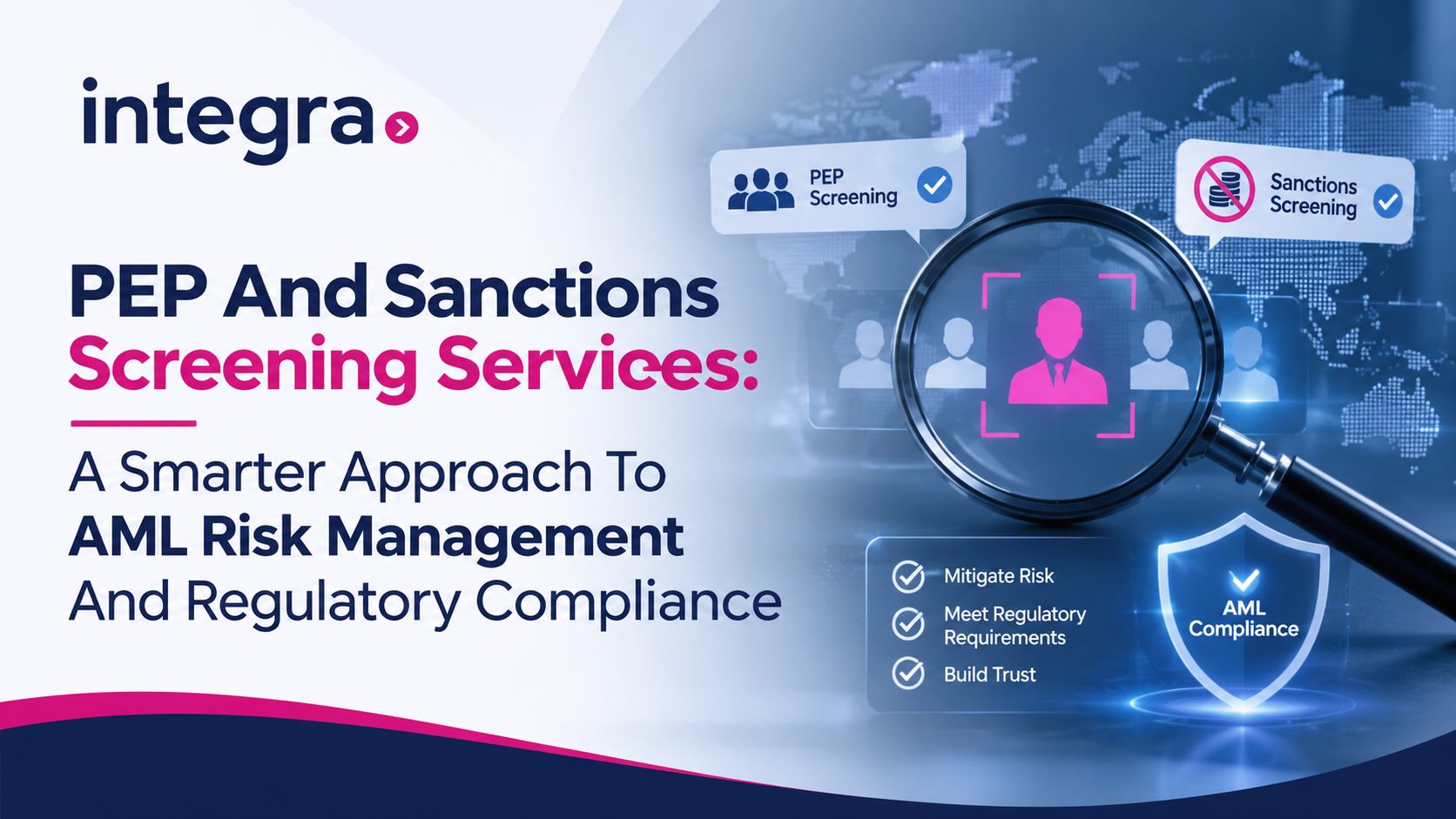
In an increasingly interconnected business environment, organisations face growing challenges in identifying financial crime risks and meeting regulatory obligations. Money laundering, terrorist financing, corruption and sanctions evasion remain significant concerns for businesses operating across different jurisdictions. Having effective systems to identify and manage these risks is therefore essential. This is where PEP And Sanctions Screening Services play a vital role in a strong Anti-Money Laundering (AML) and Counter-Terrorist Financing (CFT) framework. For regulated businesses and professional service providers, screening customers, beneficial owners and associated parties helps identify potential exposure to politically exposed persons (PEPs), sanctioned individuals and entities, and other higher-risk relationships. With a structured, risk-based approach, organisations can make informed decisions, strengthen due diligence and maintain greater confidence in their compliance processes. At Integra, we help organisations build, strengthen and maintain practical AML/CFT compliance frameworks through tailored advisory, risk assessments, outsourced Compliance Officer Support and technology-enabled solutions.
What Are PEP And Sanctions Screening Services?
PEP and sanctions screening services involve checking individuals and organisations against relevant databases and official sanctions lists to identify potential financial crime and regulatory risks. A Politically Exposed Person (PEP) is an individual who holds, or has held, a prominent public position. Due to their position or influence, PEPs may present a higher risk of bribery, corruption or money laundering. Their family members and known close associates may also require consideration as part of a risk-based assessment. Sanctions screening, on the other hand, involves identifying individuals, companies and other entities subject to financial, trade or other restrictive measures imposed by relevant authorities. These screening activities form an important part of Customer Due Diligence (CDD), Know Your Customer (KYC) procedures and Enhanced Due Diligence (EDD), helping organisations identify relationships that may require additional scrutiny.
Why Are PEP And Sanctions Screening Important?
Effective screening is more than an administrative requirement. It is an essential risk management measure that helps organisations identify potential threats before establishing or continuing business relationships. Here are some key reasons why businesses should prioritise effective screening procedures:
- Meeting Regulatory Obligations
Financial institutions and other regulated entities are expected to implement appropriate AML/CFT controls in accordance with applicable laws, regulations and supervisory requirements. Screening supports these obligations by helping identify customers who may require additional due diligence.
- Identifying Financial Crime Risks
Screening helps businesses identify potential connections to corruption, money laundering, terrorist financing and sanctions-related activities. Early identification allows organisations to investigate potential risks and determine appropriate next steps.
- Protecting Business Reputation
Entering into a business relationship with a sanctioned individual or a high-risk customer without appropriate checks can expose an organisation to significant reputational and operational consequences. Effective screening supports more informed business decisions.
- Strengthening Customer Due Diligence
Integrating screening into onboarding and ongoing monitoring processes enables organisations to develop a clearer understanding of their customers, beneficial owners and associated parties.
Key Elements Of An Effective PEP And Sanctions Screening Process
An effective screening programme should be structured, consistent and aligned with the organisation’s risk profile and regulatory environment. Important elements include:
Customer and Beneficial Ownership Screening
Screening should not be limited to the individual or entity directly engaging with the business. Depending on the applicable requirements and risk assessment, organisations should also consider beneficial owners, directors, authorised representatives and other relevant associated parties.
PEP Identification and Risk Assessment
Identifying a PEP does not automatically mean that a business relationship must be rejected. Instead, organisations should assess the nature of the public position, geographical exposure, source of wealth, source of funds and other relevant risk factors. Where appropriate, Enhanced Due Diligence measures should be applied, including senior management approval and ongoing monitoring.
Sanctions List Screening
Organisations should screen relevant parties against applicable sanctions lists and consider the requirements of the jurisdictions in which they operate. This may include reviewing national and international sanctions designations, depending on the organisation’s legal and regulatory obligations.
Adverse Media Screening
Adverse media checks can complement PEP and sanctions screening by identifying publicly reported information relating to potential financial crime, corruption, fraud or other reputational concerns. However, negative media coverage should be assessed carefully, taking into account the reliability, relevance and context of the information.
Ongoing Monitoring and Periodic Reviews
Screening should not be treated as a one-time exercise. Customer circumstances and sanctions designations can change over time. Regular rescreening and event-driven reviews help organisations identify emerging risks and respond appropriately.
Common Challenges Businesses Face With PEP And Sanctions Screening
Despite the importance of screening, many organisations experience operational and compliance challenges. These may include:
- False positives: Similar names or incomplete information can generate matches that require further investigation.
- Changing regulatory requirements: Different jurisdictions maintain different sanctions frameworks and compliance expectations.
- Data management difficulties: Maintaining accurate customer information and documented screening results can become challenging as businesses grow.
- Limited internal resources: Smaller organisations may not have dedicated compliance teams or specialised screening expertise.
- Inconsistent procedures: Without documented processes, screening decisions and escalation practices may vary across departments.
Addressing these challenges requires a practical compliance framework supported by clear procedures, appropriate technology and knowledgeable compliance professionals.
How Integra Supports Your AML/CFT Compliance Requirements
At Integra, we understand that regulatory compliance should be practical, proportionate and aligned with your organisation’s operational needs. Our approach focuses on helping businesses establish and maintain effective AML/CFT frameworks rather than simply addressing individual compliance requirements. Through our compliance services, we support organisations with:
- PEP and sanctions screening support: Assistance with screening procedures and the assessment of potential matches.
- Customer Due Diligence: Support with customer identification, KYC documentation and due diligence reviews.
- Business Risk Assessments: Identifying and evaluating potential money laundering and terrorist financing risks.
- AML/CFT Policies and Procedures: Developing and strengthening internal compliance policies and operational controls.
- Outsourced Compliance Officer Support: Access to experienced compliance professionals for ongoing assistance, documentation reviews and compliance feedback.
- AML Advisory Services: Practical guidance to help organisations understand regulatory expectations and address compliance gaps.
We also support technology-enabled compliance processes through Onbordin, our digital onboarding platform, which helps organisations manage document collection, initial risk assessments and due diligence records through a centralised workflow. By combining professional expertise with structured processes and technology, Integra helps organisations improve compliance oversight and operational efficiency.
Building A Risk-Based Approach To Screening
No two organisations have exactly the same risk exposure. Factors such as business activities, customer profiles, geographical reach, ownership structures and delivery channels can influence the level of risk. A risk-based approach enables businesses to allocate compliance resources effectively and apply appropriate controls based on identified risks. For example, a customer identified as a PEP may require Enhanced Due Diligence, while a potential sanctions match may require immediate escalation and assessment under applicable legal obligations. A possible match should be investigated carefully rather than automatically treated as a confirmed designation. Maintaining clear records of screening results, investigations, decisions and approvals is equally important. These records help demonstrate how an organisation identifies, evaluates and manages potential risks.
Stay Ahead Of Regulations With Integra
Regulatory expectations continue to evolve, making effective AML/CFT compliance an ongoing responsibility. Organisations need more than basic screening procedures; they need practical frameworks that support consistent risk identification, informed decision-making and long-term regulatory confidence. Integra works alongside organisations to strengthen their compliance capabilities through tailored advisory, risk assessments, outsourced Compliance Officer Support and technology-enabled solutions. Whether you are establishing a new AML/CFT framework, reviewing existing screening procedures or seeking additional compliance expertise, our team can help identify practical solutions suited to your regulatory and operational requirements.